Maddie at Madison Square (Rise Upskilling)
Role: Instructional Designer
Timeline: 2 weeks
Tools: Rise, SharePoint, ChatGPT
Stakeholders: People Practices, Intern Cohort
Problem: The MSG learning team brought on interns twice a year and had to upskill them on Rise from scratch each time — with no structure, no documentation, and a process that depended entirely on whoever happened to be available.
Outcome: I delivered an interactive Rise workshop (instructor led or self-paced), complete with About Me course and accompanying learner guide to onboard new designers with or without a live facilitator.
Prep
The brief was simple enough: teach the student associates how to build in Rise.
But the reality was more complex: The team ran two intern cohorts a year, and every time, upskilling started from zero. There was no documentation, no structured curriculum, and no fallback if the right person wasn't in the room. This project was about fixing that: building something that could run with a facilitator or without one — and still get someone’s hands dirty in Rise.
Instead of a feature walkthrough or a how-to deck, I decided to build a story-based course starring Maddie — a learning designer in training with a very specific heartbreak involving the Rockettes and a strict height requirement.
From there, it was just a matter of fleshing things out!
Development
First, I built an About Me course with the basic information about Maddie. Then, I went back through and sprinkled in what I called “Pro Moves” — things like incorporating accessibility principles, changing background colors or fonts, and using interactions that a new user might not find on their own.
As learners explore Rise blocks to uncover three fun facts about Maddie, they're also experiencing good instructional design in action. The "pro moves hunt" asks them to spot deliberate design choices along the way. Their final deliverable of the overall workshop is to build their own About Me course.
I also built a companion learner guide in SharePoint, packed with resources: links to Articulate's own documentation, YouTube tutorials, and design best practices broken out by type — adult learning principles, how to write good quiz questions, microcopy guidance. The kind of reference you actually return to.
The course ultimately had two versions: an instructor guide with additional facilitation context for a live session, and a self-paced version for independent learners. I facilitated it once with a cohort, but the real test came when another intern — who'd missed the live session entirely — worked through it on her own and was able to deliver her own course. That's the version of "it worked" I care about most!
The Design Check-In blocks that appear throughout the course were the connective tissue between experiencing good design and being able to reproduce it. At the end of each lesson, learners reflected on flow and pacing, engagement, and their pro moves hunt before moving on. The goal was to make the metacognition explicit — not just do it, but notice you're doing it.
A note on visuals: I used ChatGPT images in the course, which was a first for me at the time!
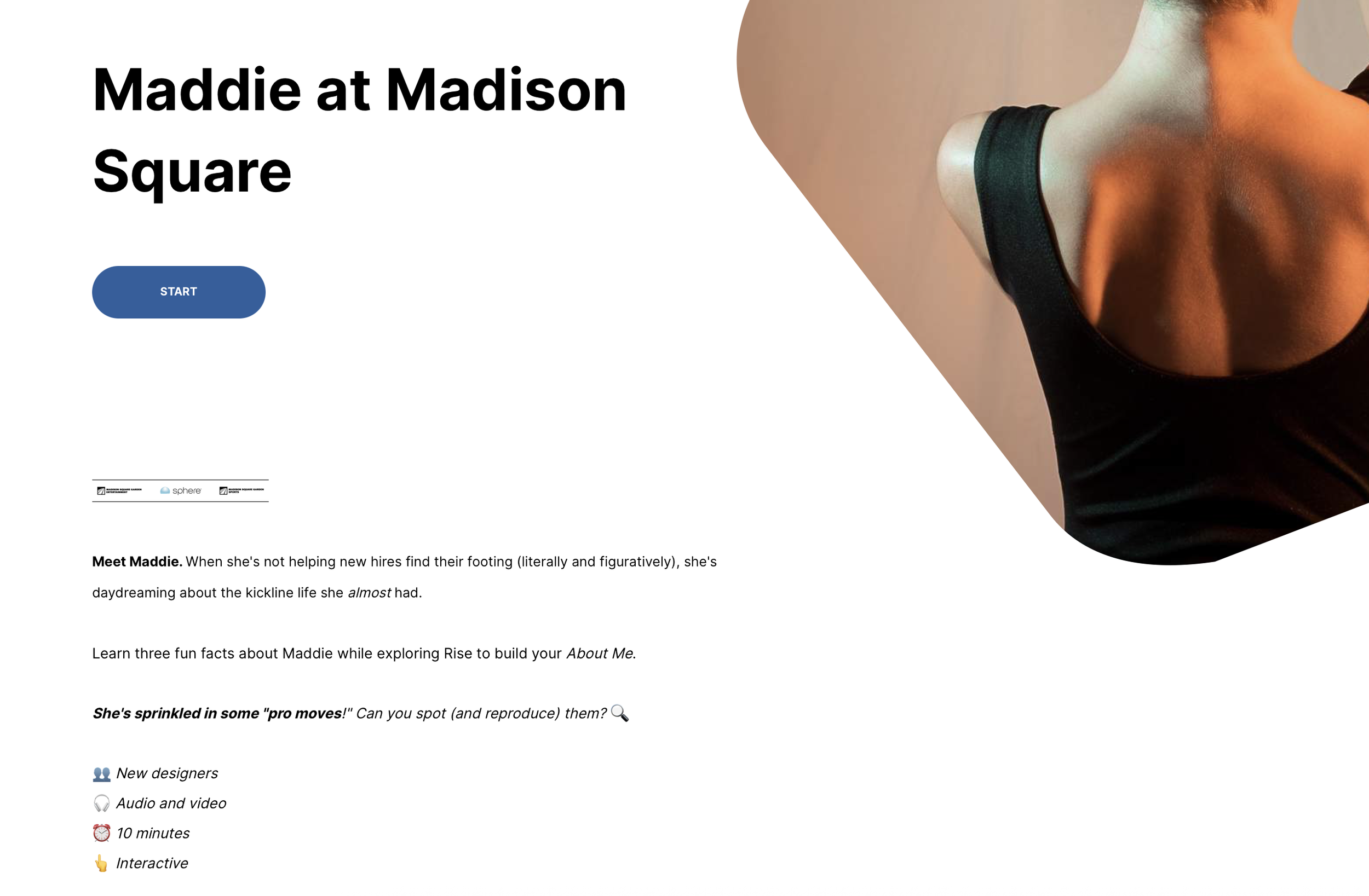
Course intro
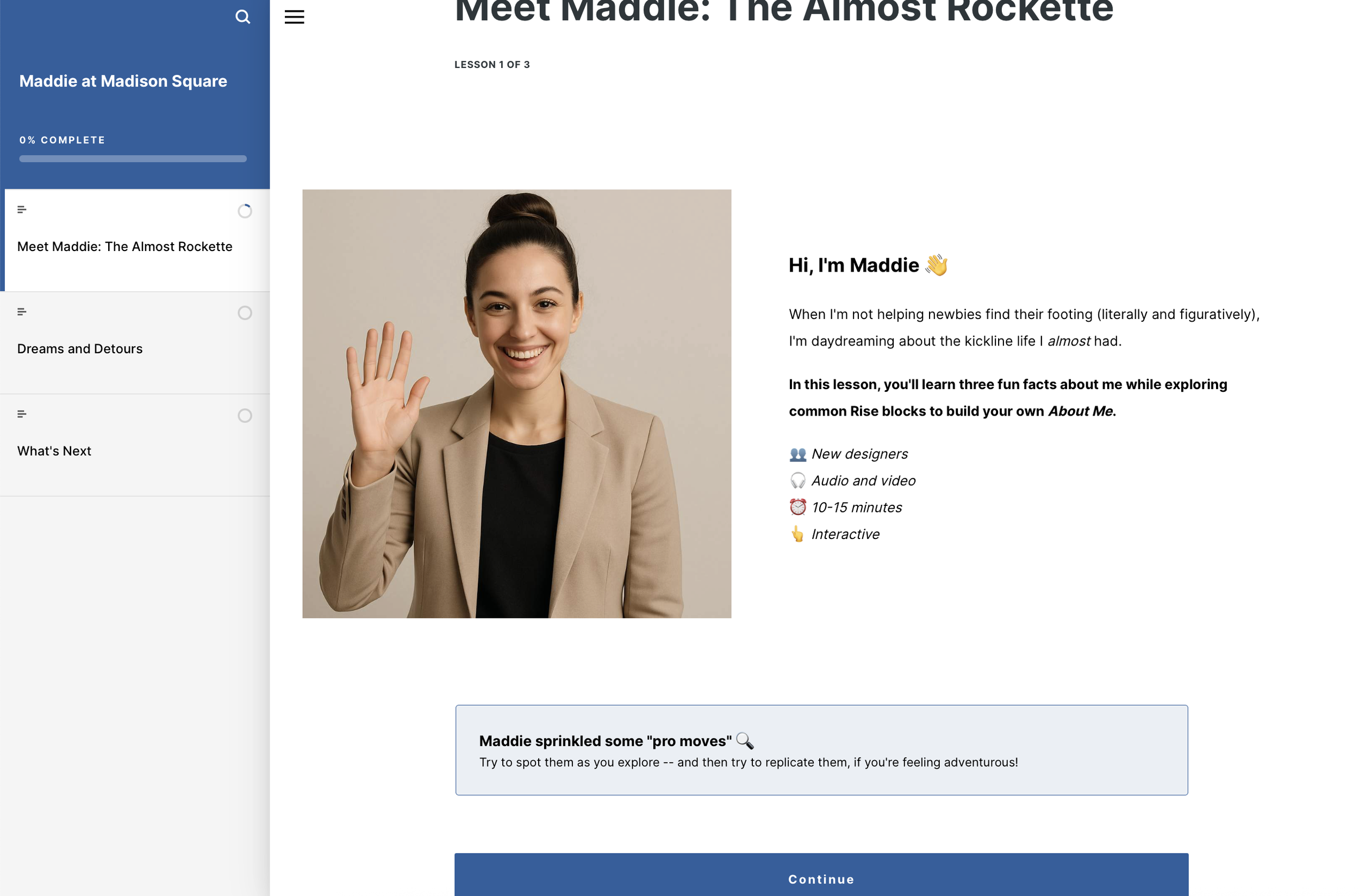
Meet Maddie + course intro
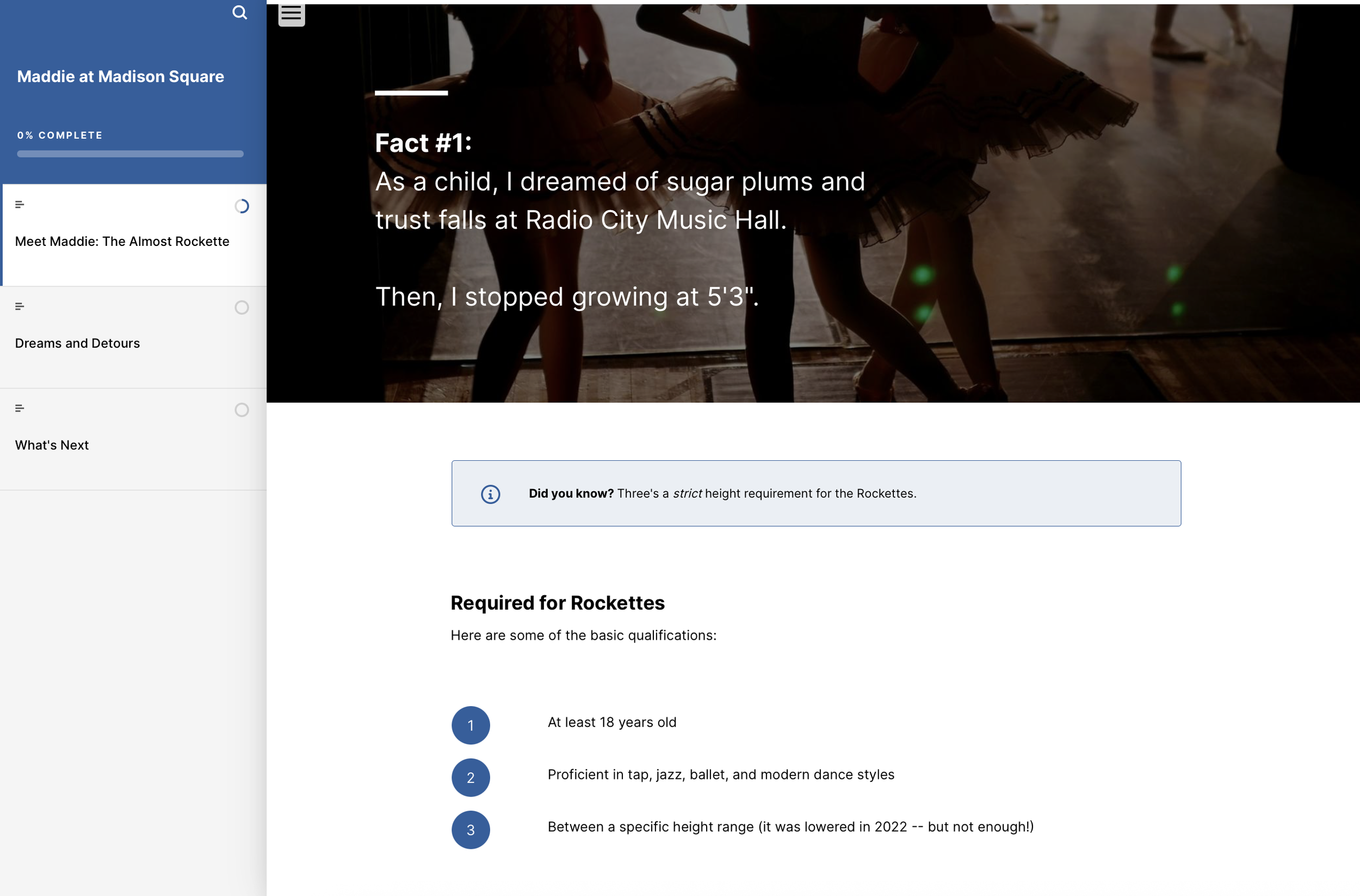
Maddie's first fun fact
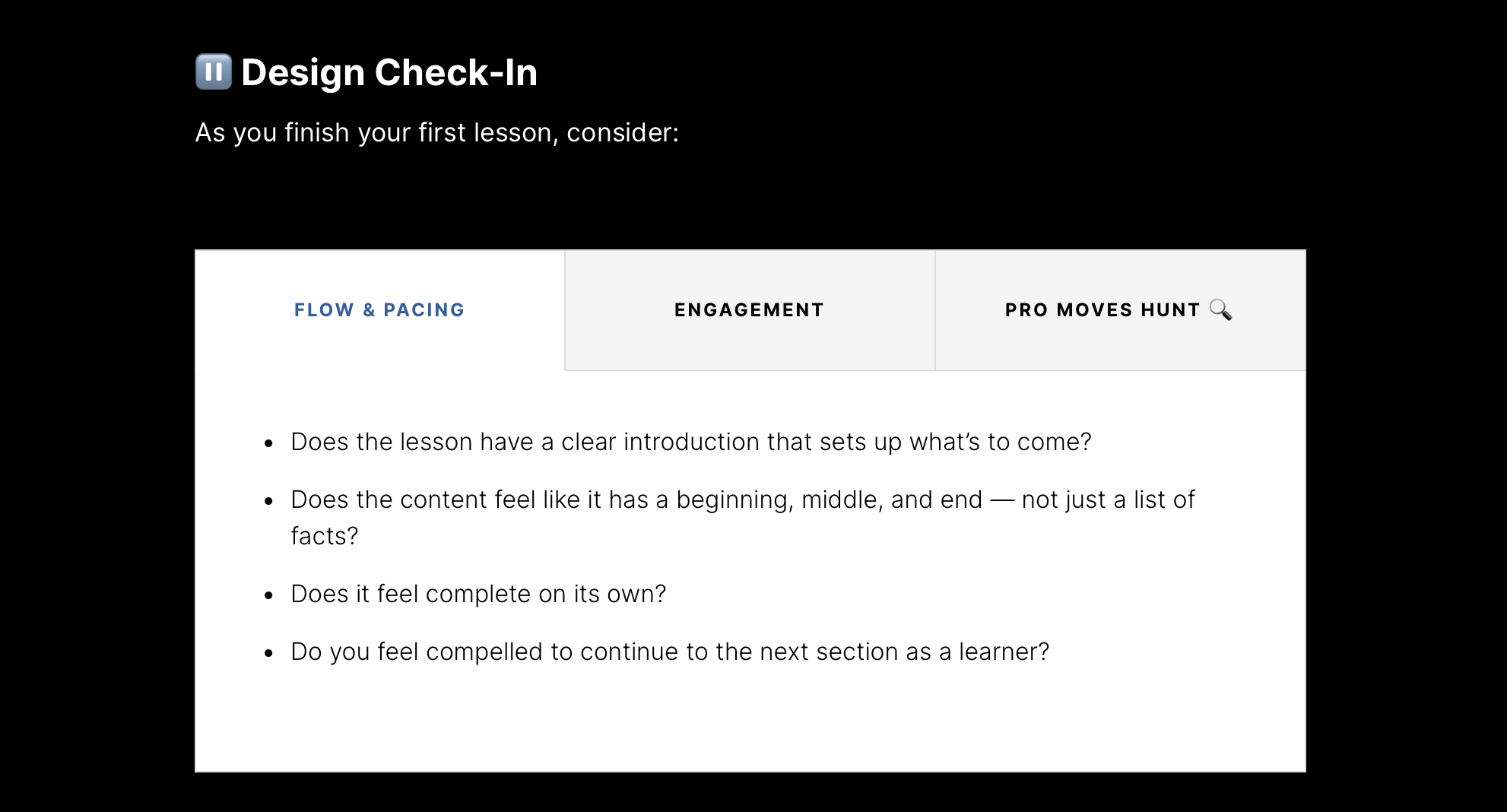
First design check in
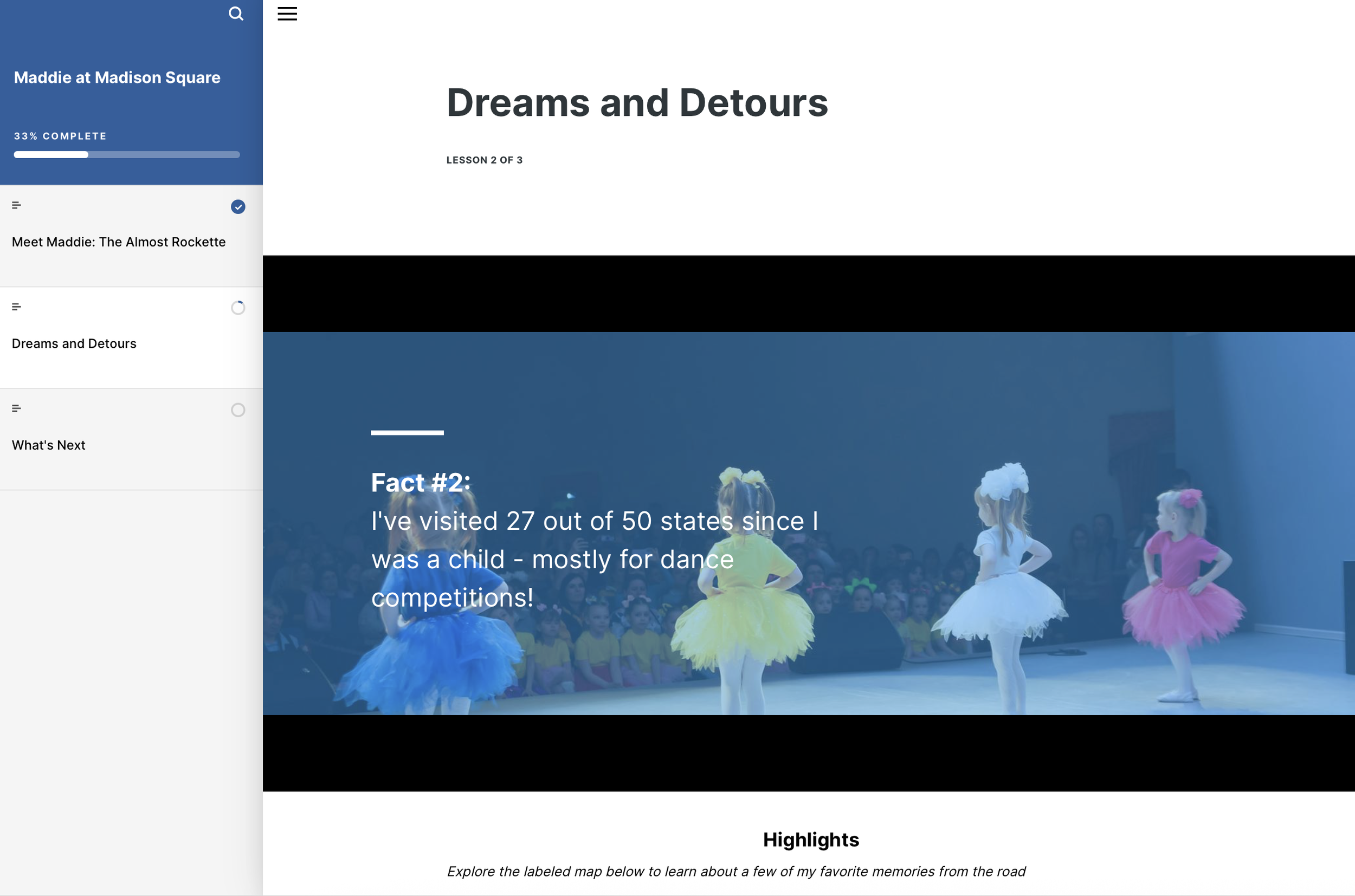
Maddie's second fun fact
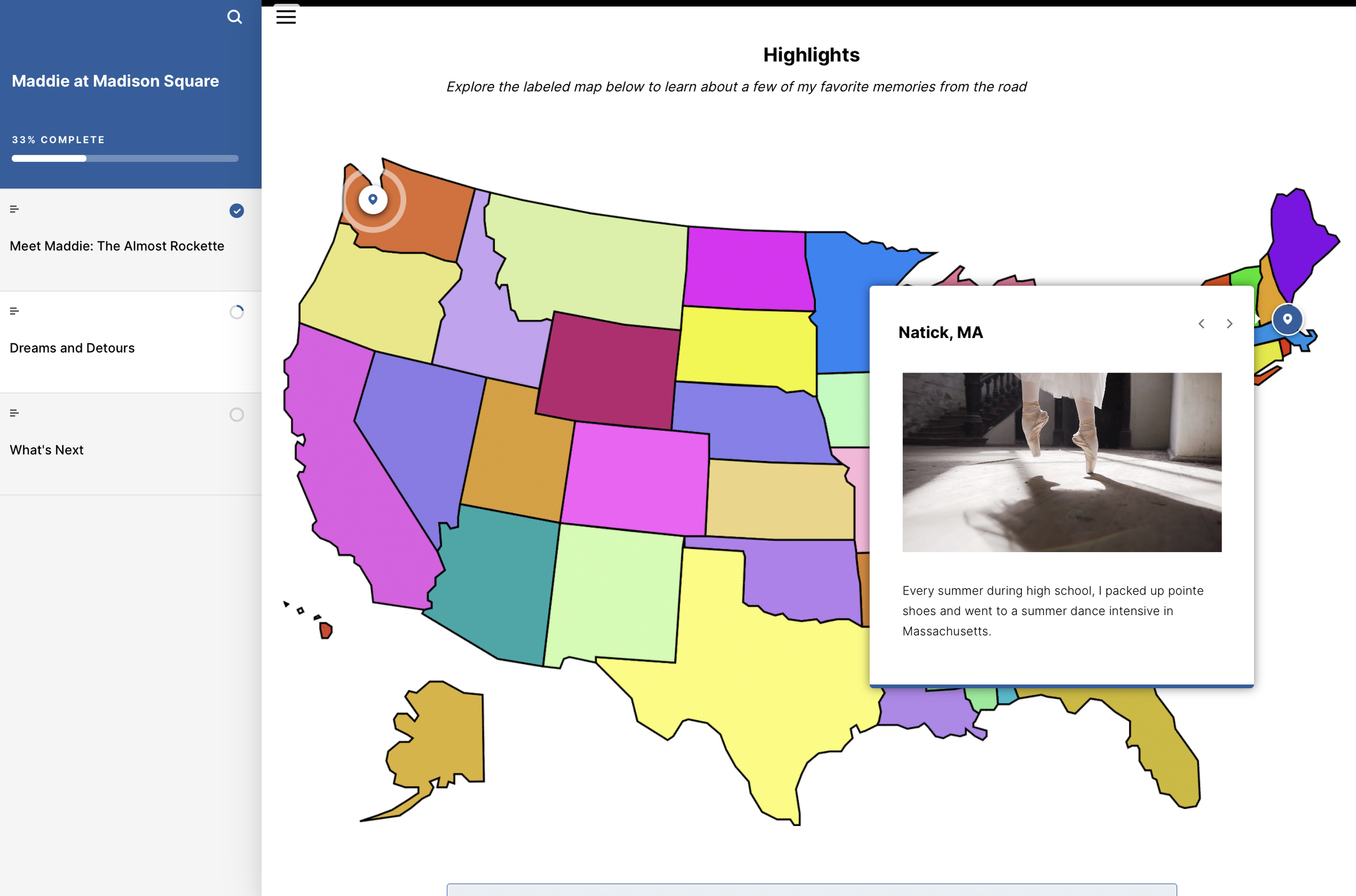
Interactive map engagement to demonstrate audio and video capabilities within Rise blocks
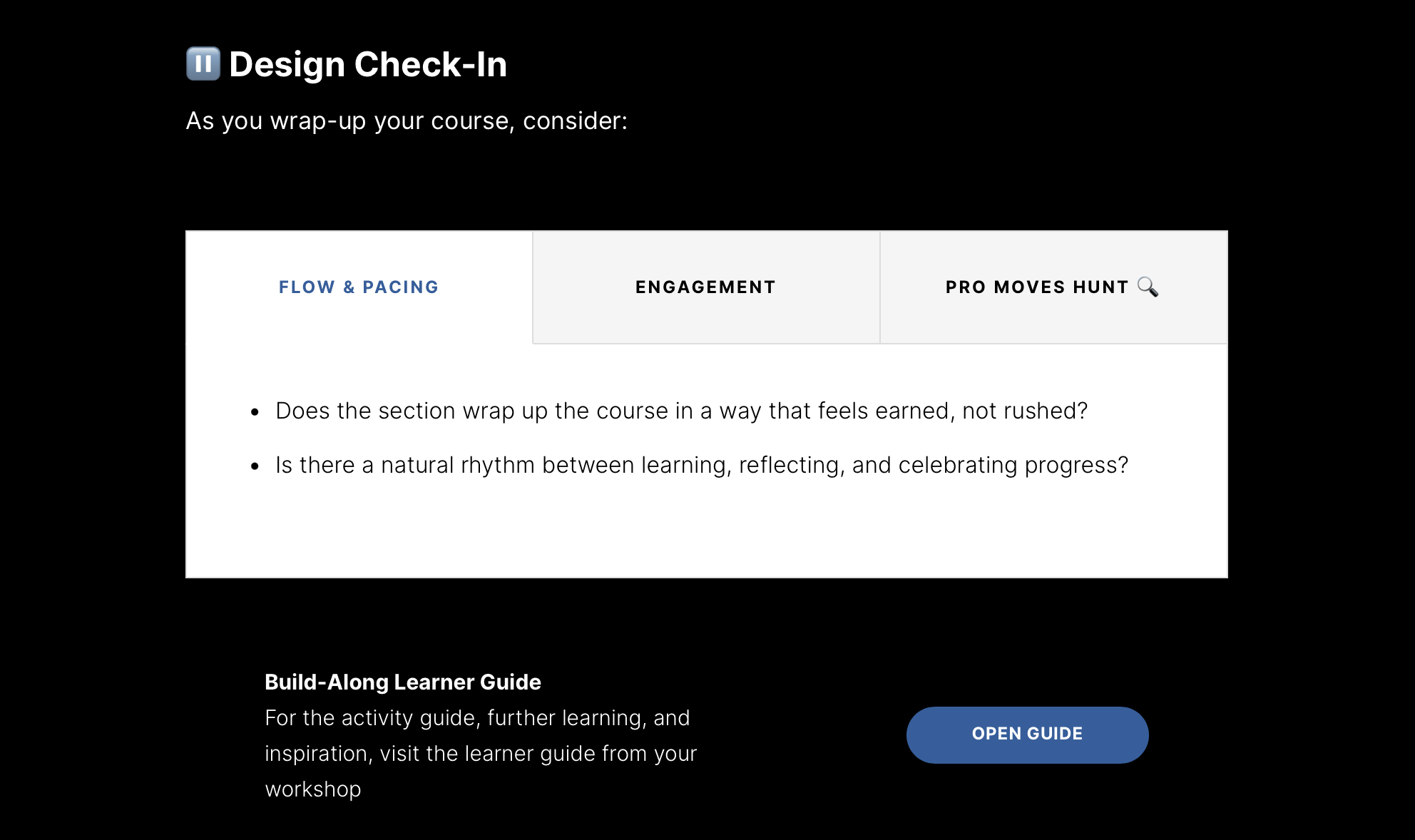
Final design check-in
What I’d do differently today:
Honestly? I'd make it snazzier. Better colors, more visual personality. But I made a deliberate choice to keep the design fairly clean and introductory — if the course itself is too advanced a piece of Rise work, it stops being a useful model for beginners and starts being intimidating. As it stands, this training may have been too effective, as one of the interns I trained is still there and I’m not!
I was working on a parallel version of this workshop for Articulate Storyline at the time of my layoff. I'd love to scale that into the same kind of interactive experience, if your organization has a need!