Booking Business Travel
Role: Instructional Designer
Timeline: 1 week (draft), 2 months (final approvals)
Tools: Rise, Camtasia, Play AI, SharePoint
Stakeholders: Global Travel Team, People Practices, Communications
Problem: After MSG rolled out a new corporate travel booking portal (CTM Lightning) in 2023, employees kept defaulting to old habits — including attempting to book personal travel.
Outcome: A 5-minute “marketing” microlearning introducing the new platform with a video and highlighting salient policy points via interactive engagements and a quiz.
Prep
This was my first project when I started at MSG — and I learned quickly that it had been on a back-back-back burner for over a year. The new booking portal launched in 2023, but no one had ever formally told employees about it beyond a post on the company intranet. And old habits from the previous platform had... persisted.
After meeting with the travel team, it became clear this wasn't a training problem. It was a marketing problem. Employees didn't need a deep-dive into travel policy or a step-by-step guide on how to book (both existed in accessible formats already!).
They needed to be introduced to the platform, shown it was easy, and reminded — clearly, more than once — that personal bookings were a thing of the past.
Development
The travel team's top priority was clear: employees needed to understand that the new portal was for business travel only. That message appears four times in the course — not by accident!
Getting the overall approach approved by the SME, though. That required a conversation.
The executive wanted the video to lead with what employees couldn't do: No booking above your class. No personal travel. No black car to the airport… unless you're an EVP. I asked if we could talk through it in person after his red-lines on my script. Eventually, we were able to meet face to face. I brought a study from a government agency that had used humor to train serious compliance topics and seen a significant bump in retention. I wanted him to understand that my ultimate approach wasn't "ignore the rules." It was "lead with what learners can do, and the rules will land better."
He said he trusted me to do my job — and let me move forward with what he'd initially called, not entirely as a compliment, the "candyland approach."
The video was punchy and low-friction: here's the platform, look how easy it is to book a trip, here's what you need to know about the policies.
Meanwhile, the included knowledge check required learners to actually open the portal to answer correctly — not guess. The seat preference question was the deliberate "gotcha," designed to get people into the system early to set their preferences before they ever needed to book a trip. In our review meeting, the EVP (who served as SME) answered that question from memory and got it wrong — and immediately wanted to fact check on the platform. Working as designed!
I also proposed putting the video on office screens with a QR code — a natural point-of-use entry point for anyone who saw it while walking past. The course was also embedded at strategic touchpoints throughout the company intranet.
Microlearning entry
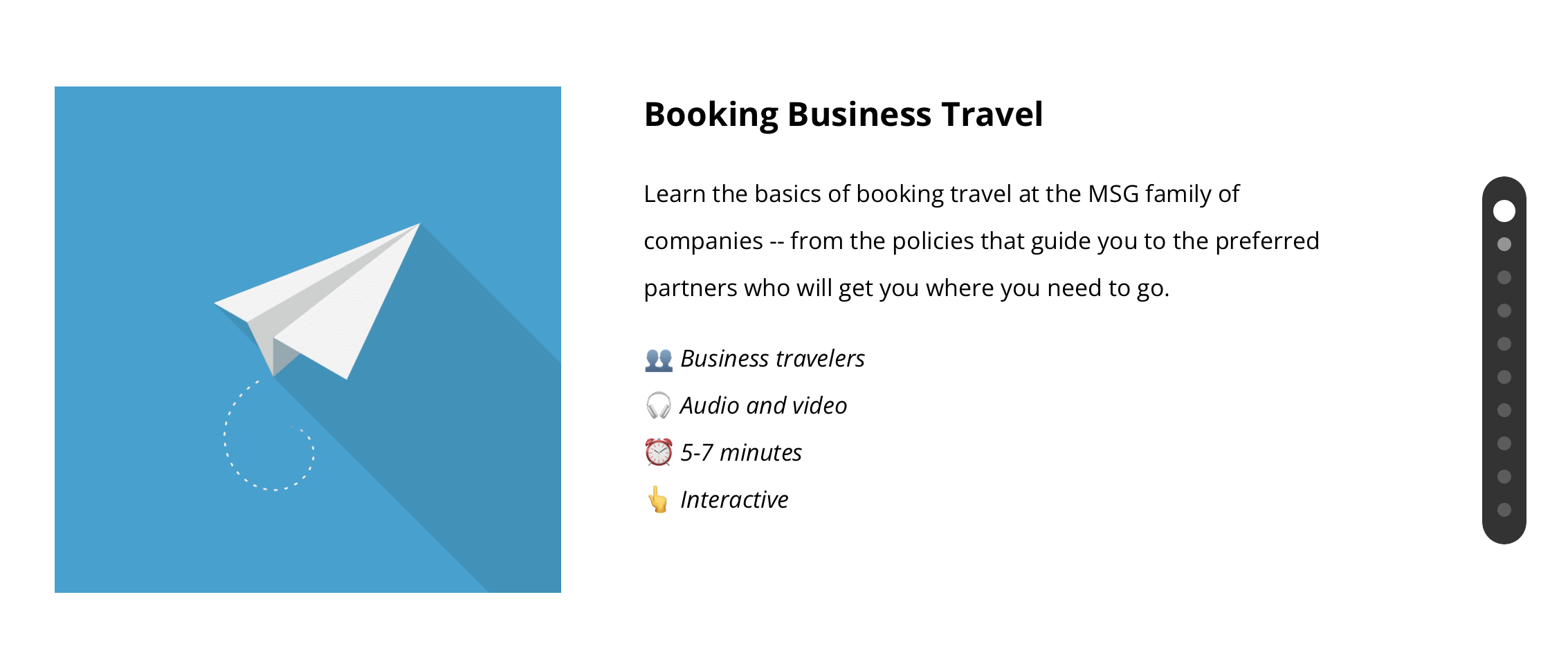
Standard microlearning intro
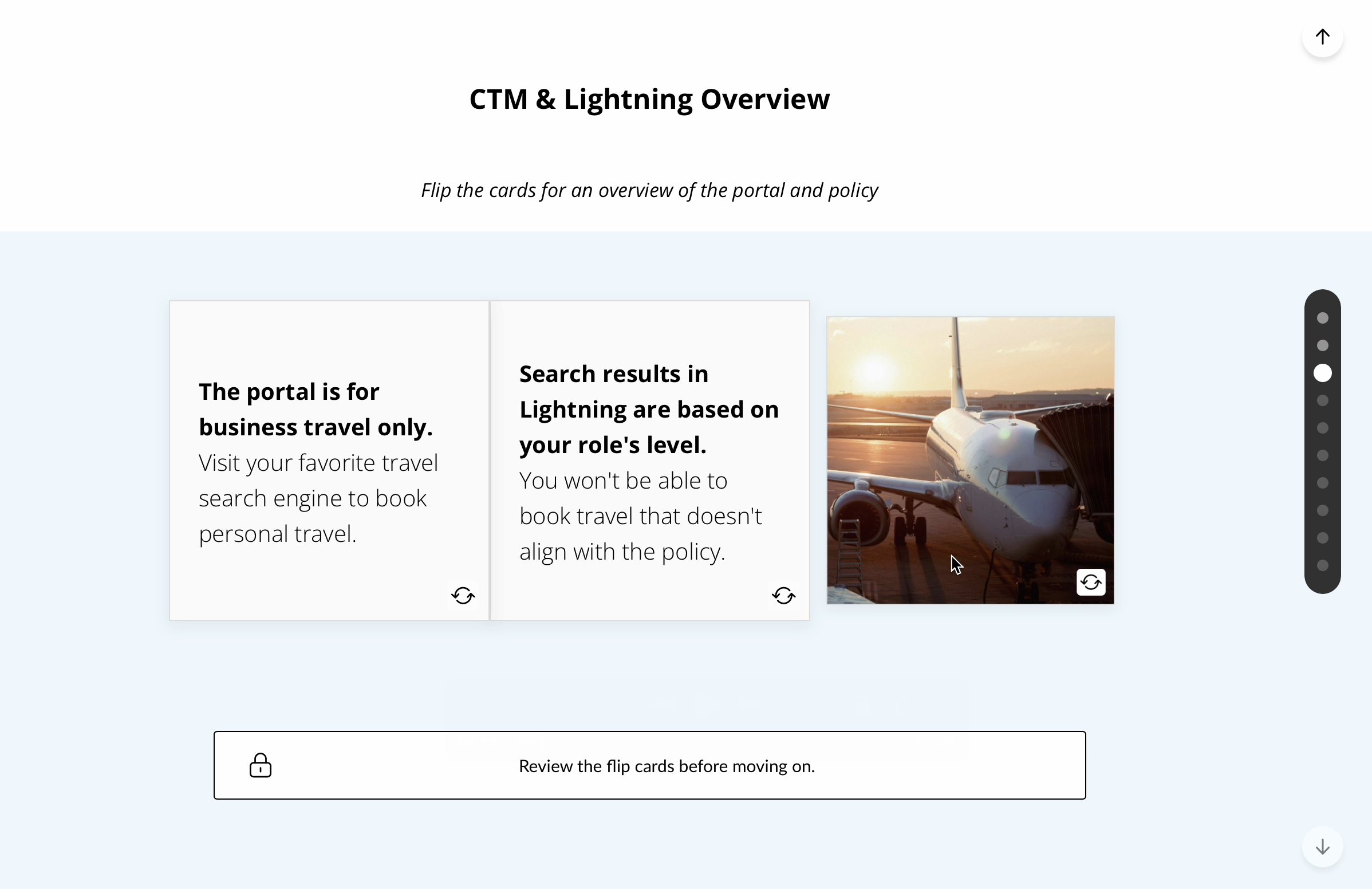
Salient points
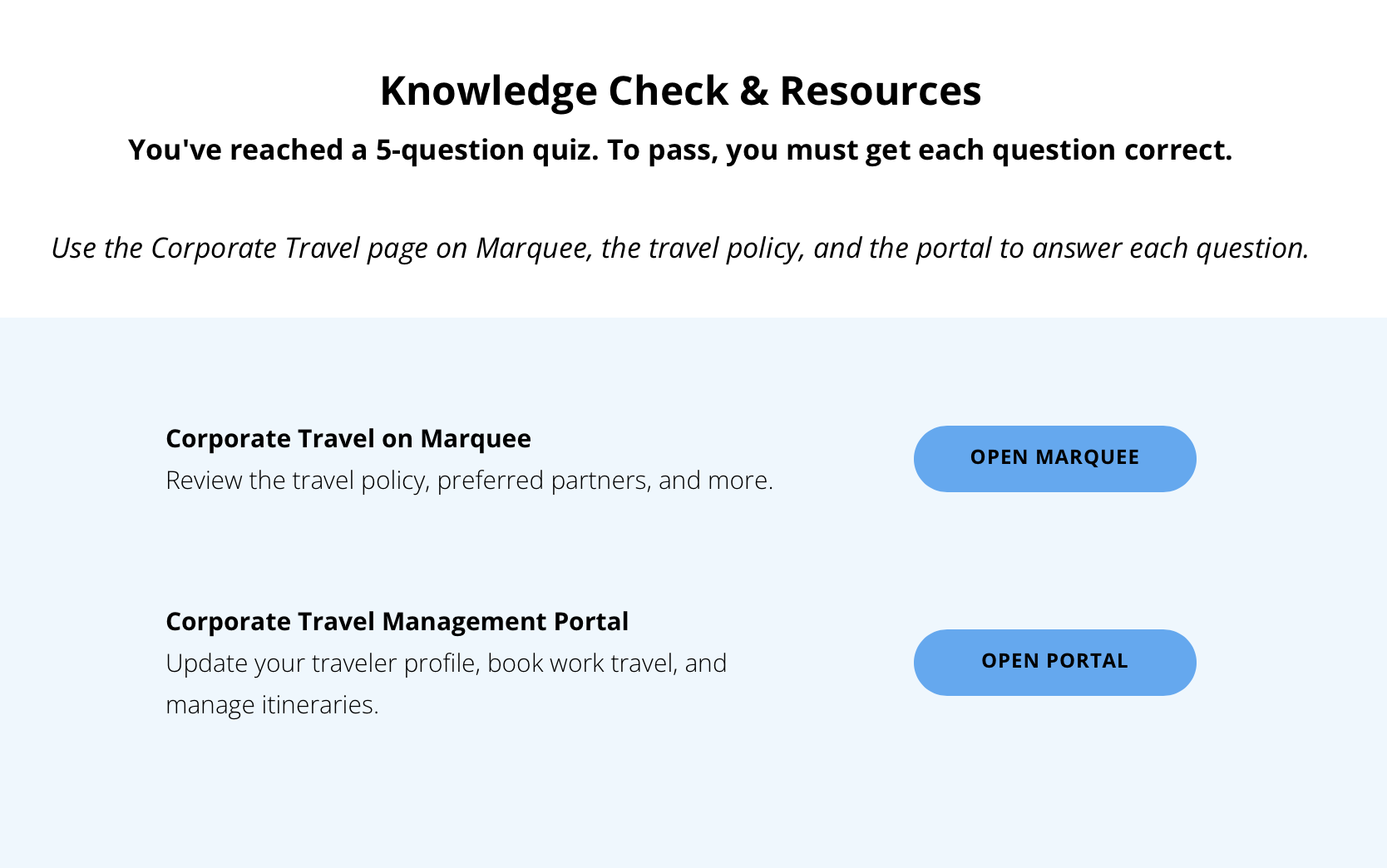
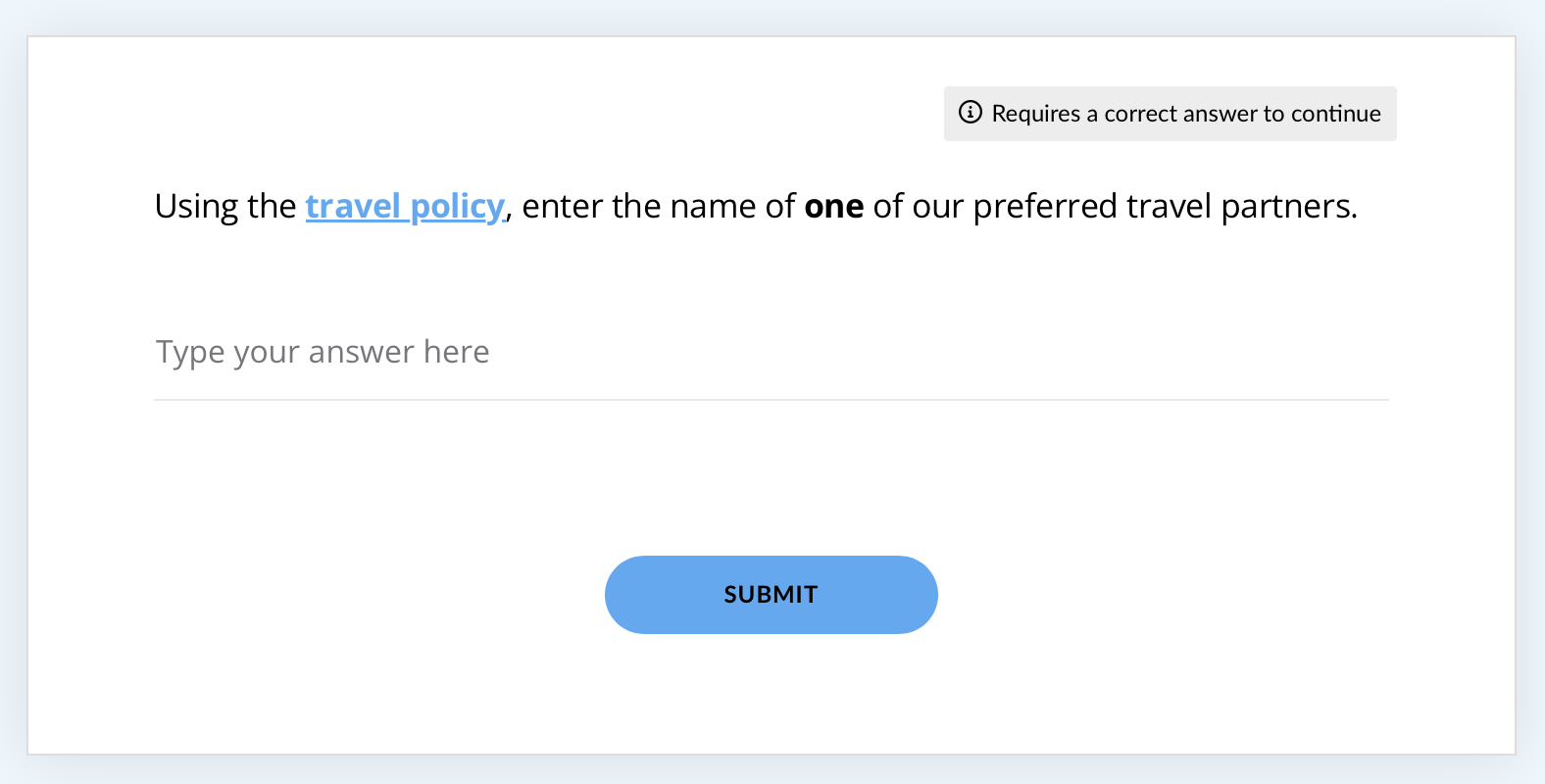
Quiz question #1 (requested by SME for recall)
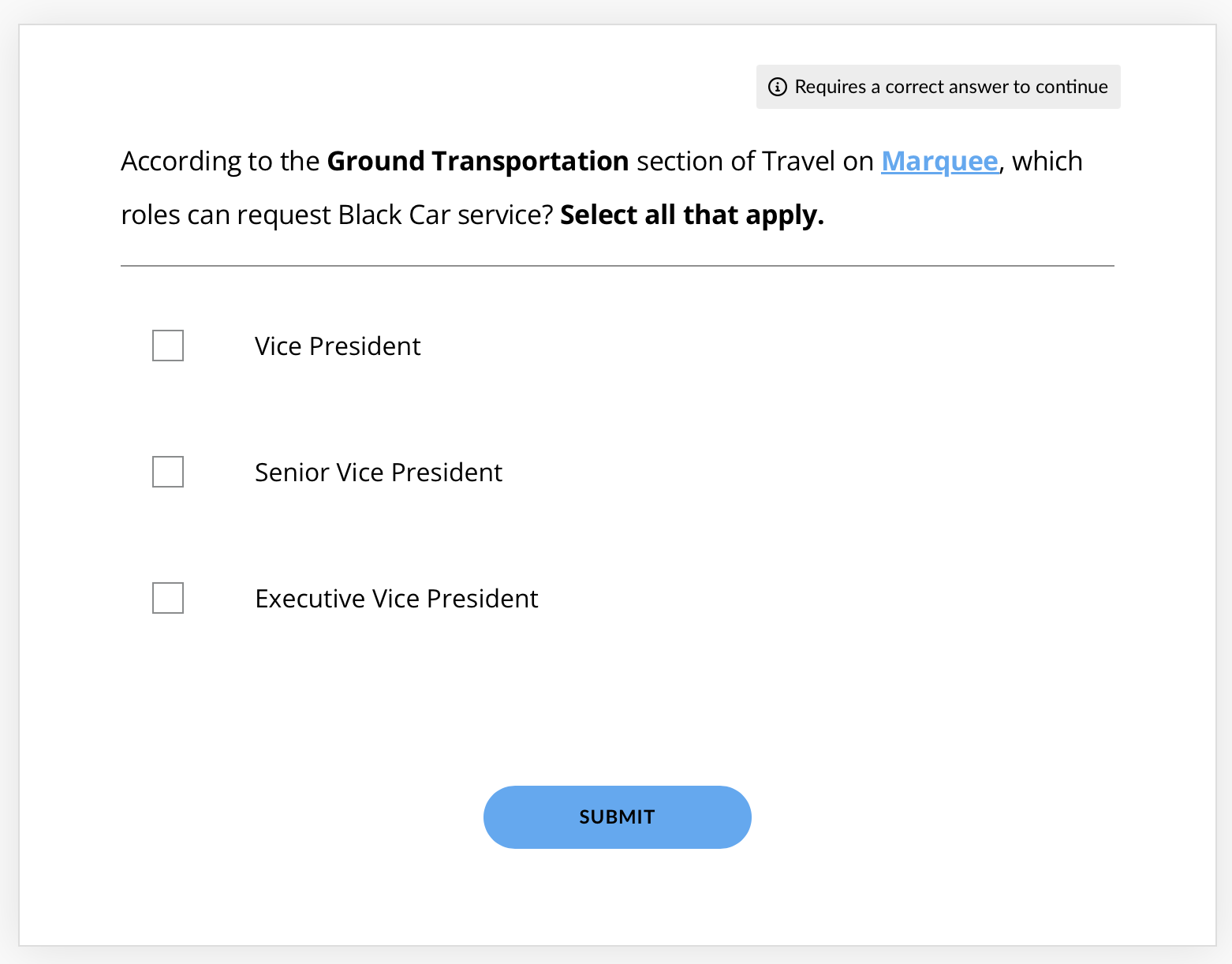
Quiz question #2 (requested by SME)
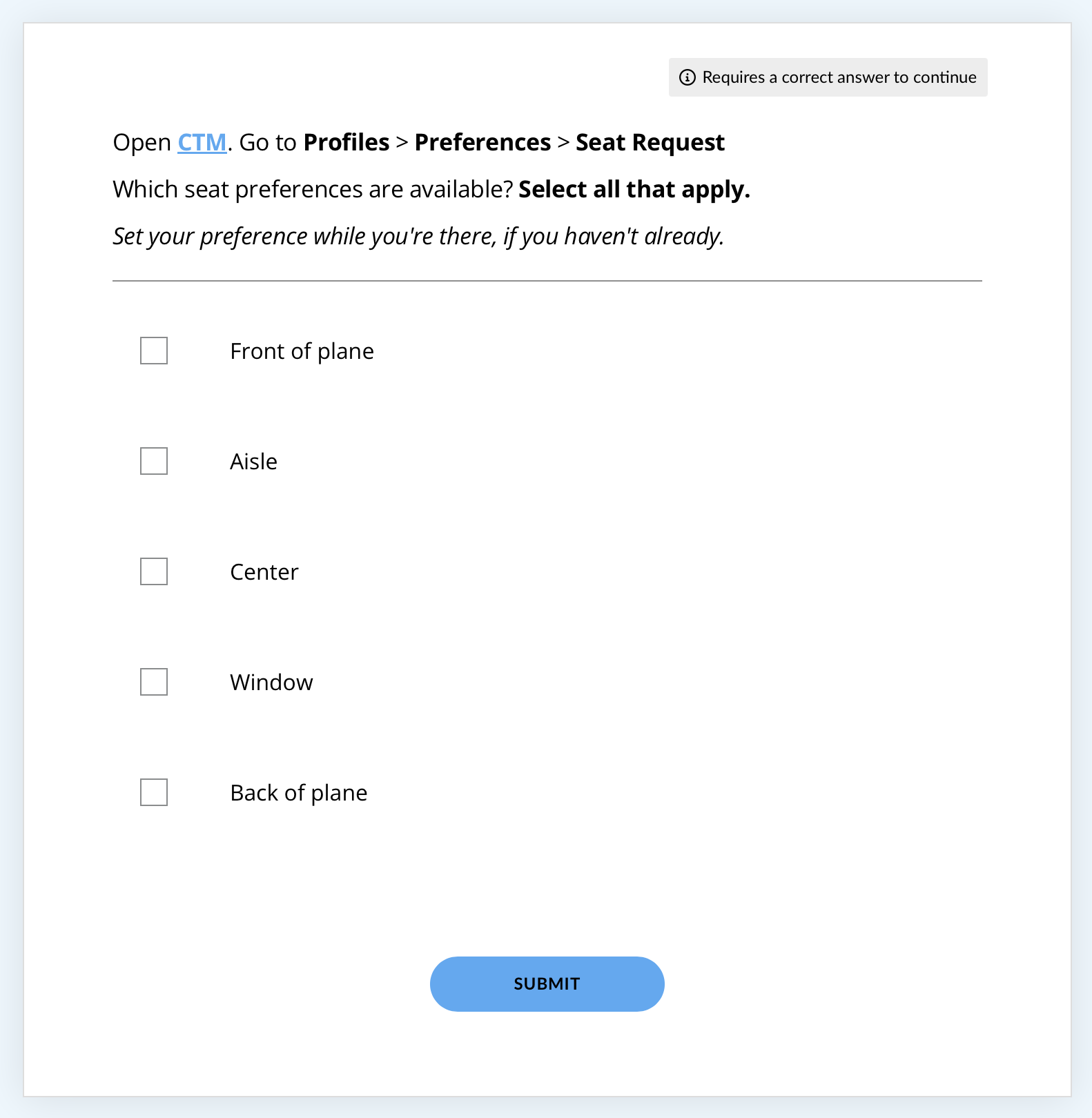
Quiz question #3 (to get them in the platform)
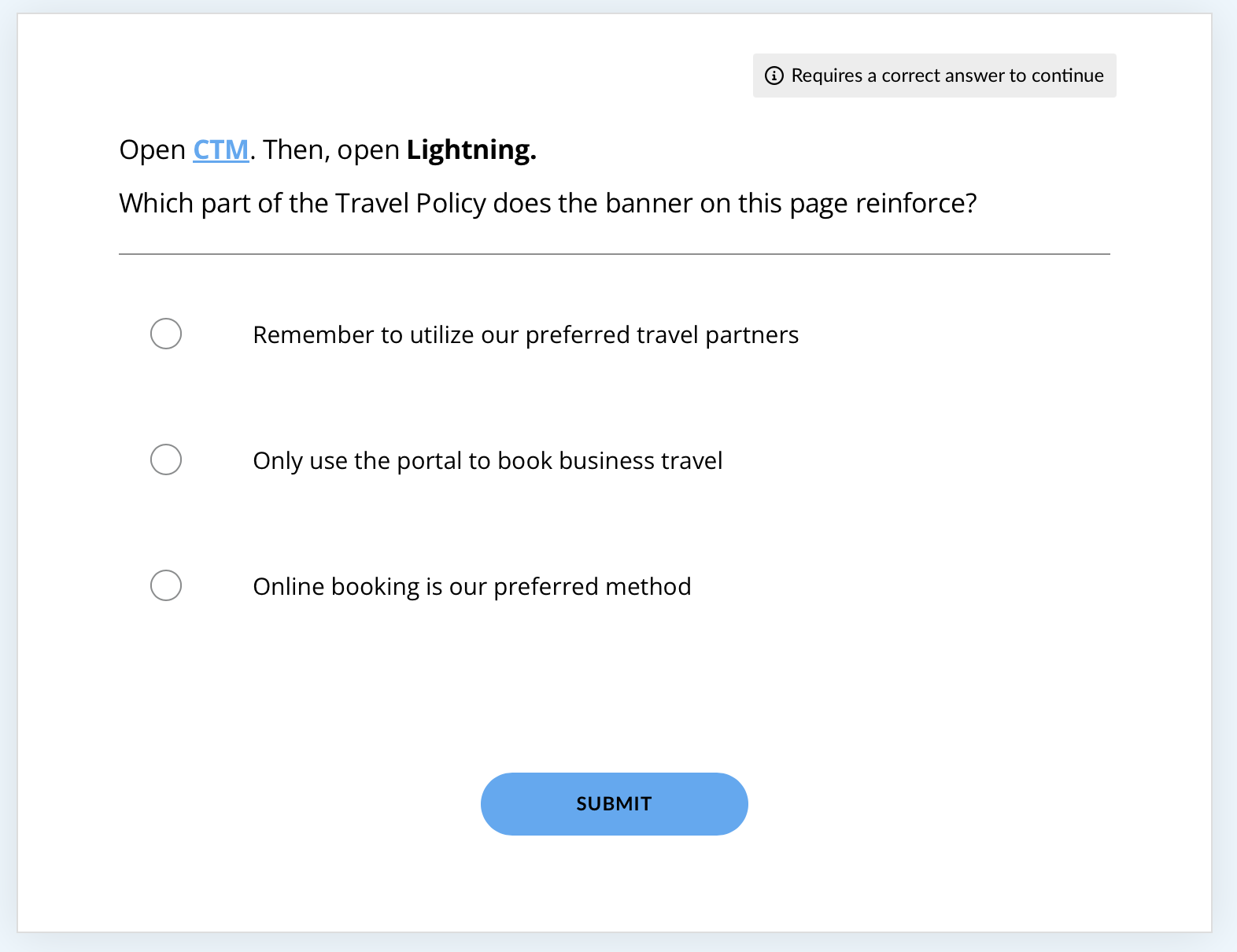
Quiz question #4 (a final reminder)
What I’d do differently today:
The course used an AI-generated version of an employee's voice — and the employee was genuinely excited to do it himself. I was new to the organization and didn't feel confident pushing back on the AI request at the time, even though I knew the content would be better served with bespoke narration.
Looking back, I would advocate harder for the human take. The AI voice still sounds slightly off, and the warmth of a real person who was enthusiastic about the project would have served the "marketing not training" vibe much better.
I'd also go back and fix a pacing issue in the video and a moment where the on-screen text and narration aren't quite in sync. Small things — but the kind that nag at you when you know they're there.