Mental Health in Customer Support

Role: Instructional Designer
Timeline: 4 months
Tools: Articulate 360, Google Workspace
Stakeholders: CS Training, CS Leadership, Partner Management, Heart & Soul (internal mental health advocates), CS Advisors
Problem: Advisors expressed feelings of overwhelm, isolation, and anxiety in response to Covid-19 and on-the-job stressors.
Outcome: I delivered a 30-minute training course with supplemental resources and best practices for a variety of mental health topics.
Prep
When Covid sent everyone home in 2020, Spotify's customer support advisors — already navigating a high-stress role — were suddenly doing it in isolation. Stakeholders wanted to respond thoughtfully, and that meant more than a list of hotline numbers. It meant building something that could actually meet advisors where they were, across every region where we had call centers.
The catch: "where they were" looked very different depending on where they were. In some countries (like the Philippines), discussing mental health openly carries real stigma. Whatever we built had to work everywhere.
After meeting with stakeholders — CS Training, CS Leadership, Partner Management, and our internal mental health advocates, Heart & Soul — the goal came into focus: a training that acknowledged what advisors were going through without overstepping into diagnosis or treatment.
We're not clinicians; we’re trainers.
That framing shaped everything that followed.
Development
The course itself covered five sections: an intro and objectives, why mental health matters to Spotify, facts and statistics, ways to take care of yourself and your peers, and a wrap-up. That portion was required and tracked for completion. Below it sat an entirely optional resource library — one module for each of the five feeling-based topics.
The most deliberate design choice in this course was what we didn't call the resources.
You won't find sections on depression, ADHD, or suicidal ideation in call center employees (something I learned is a very specific phenomenon!). Instead, the resources are organized around feelings and present-tense struggles: overwhelm, anxiety, burnout, hopelessness, difficulty focusing. This was the difference between a course that feels like a resource and one that feels like an unsolicited diagnosis.
Each resource followed the same structure: What does this feel like? What can I do right now? And each included a video, a written guide, everyday maintenance habits, and — crucially — a link to local support resources.
That last piece required real coordination. For every region where we had call centers, we worked with local leadership to source resources that were actually accessible to local advisors.
The response, across the board, was strongly positive.
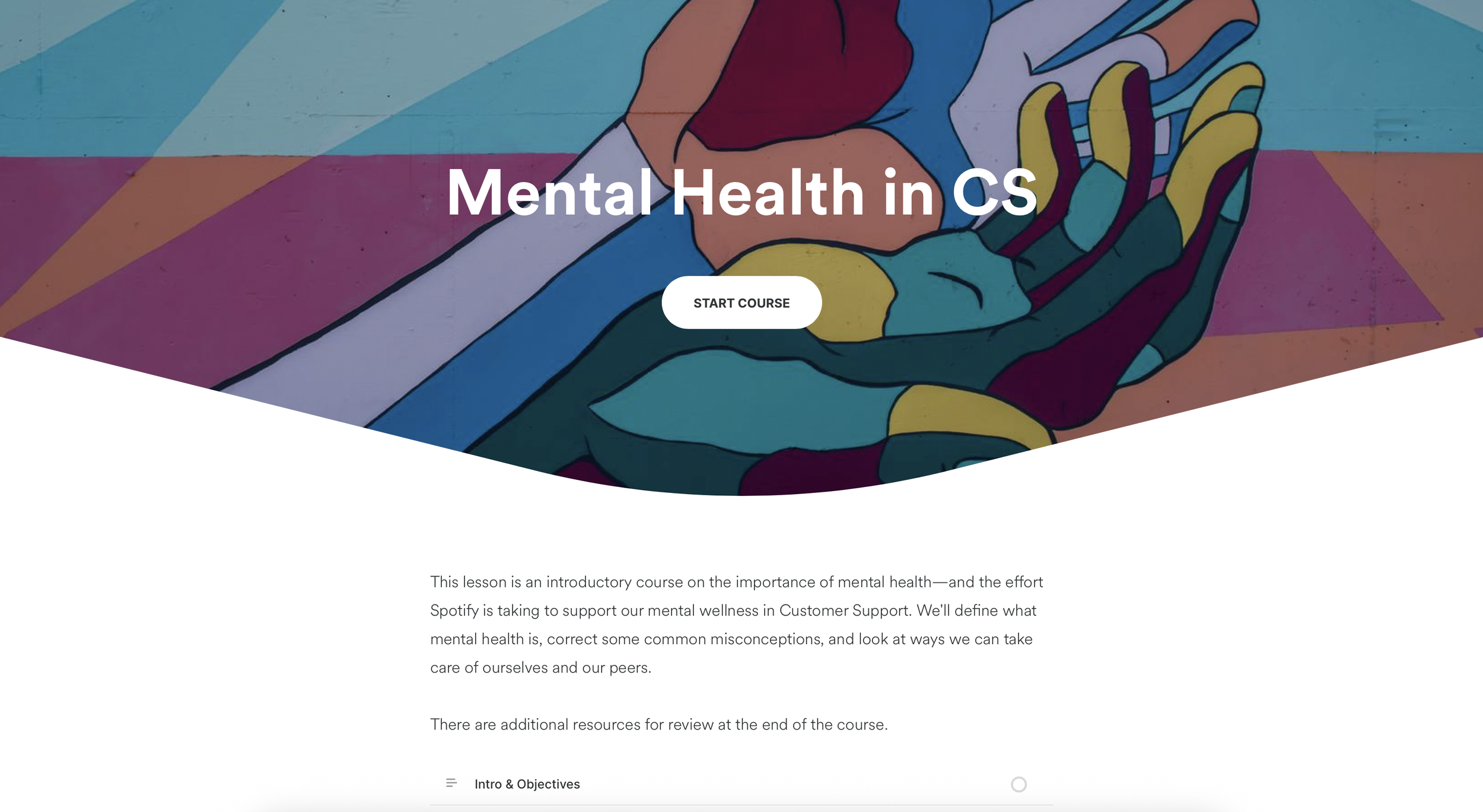
Course intro
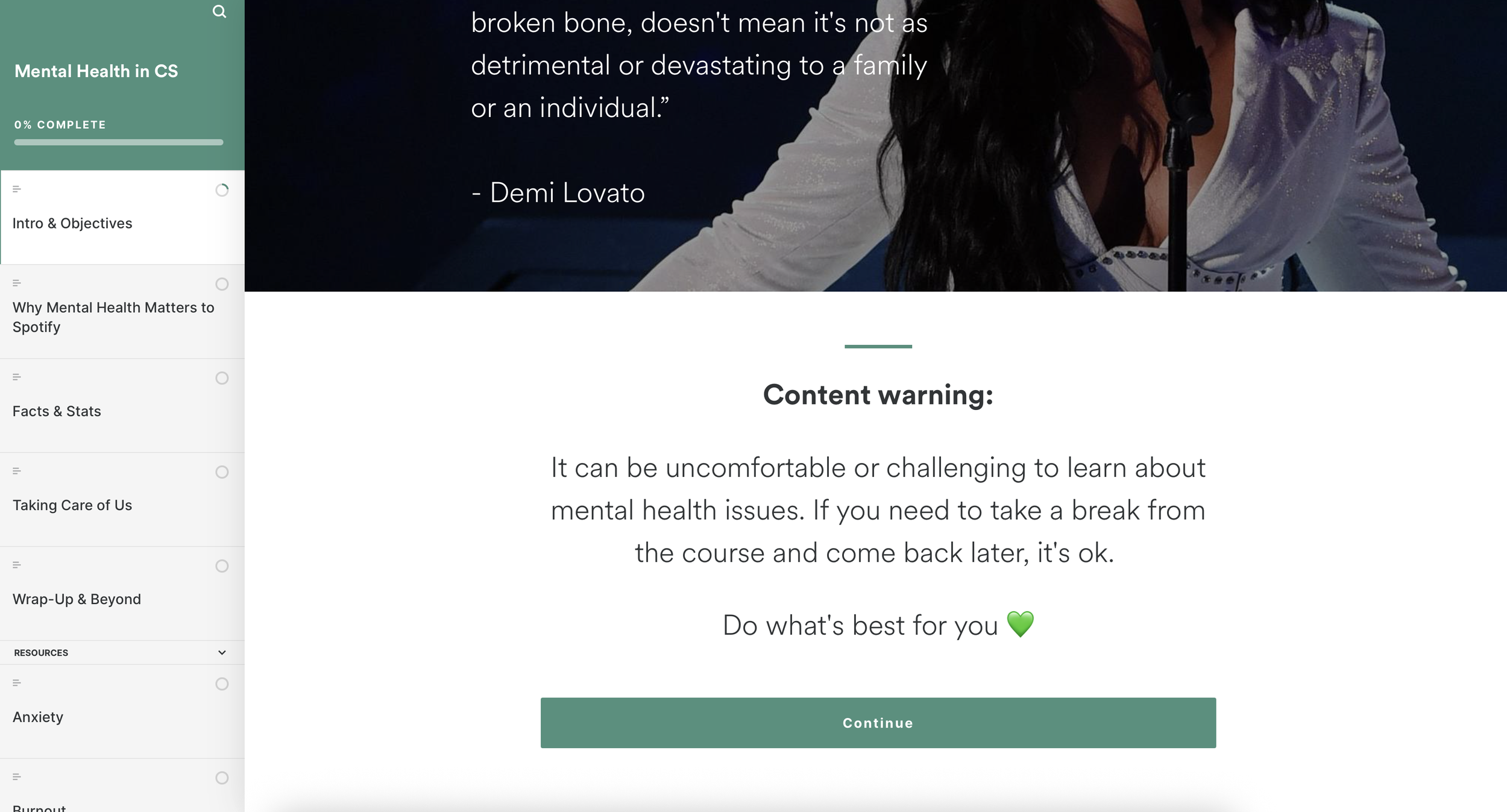
Content warning for the course
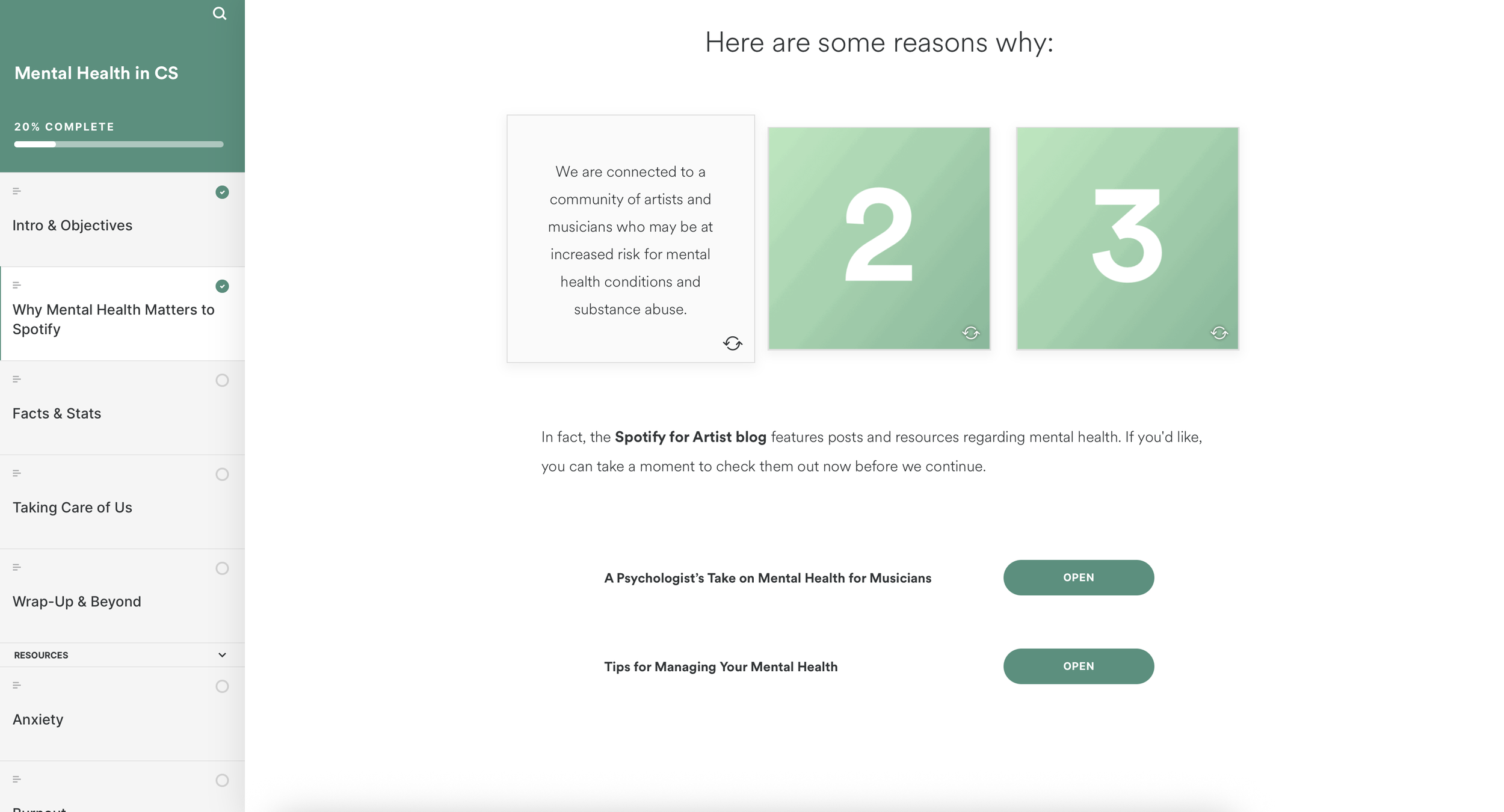
Why Mental Health is important to Spotify
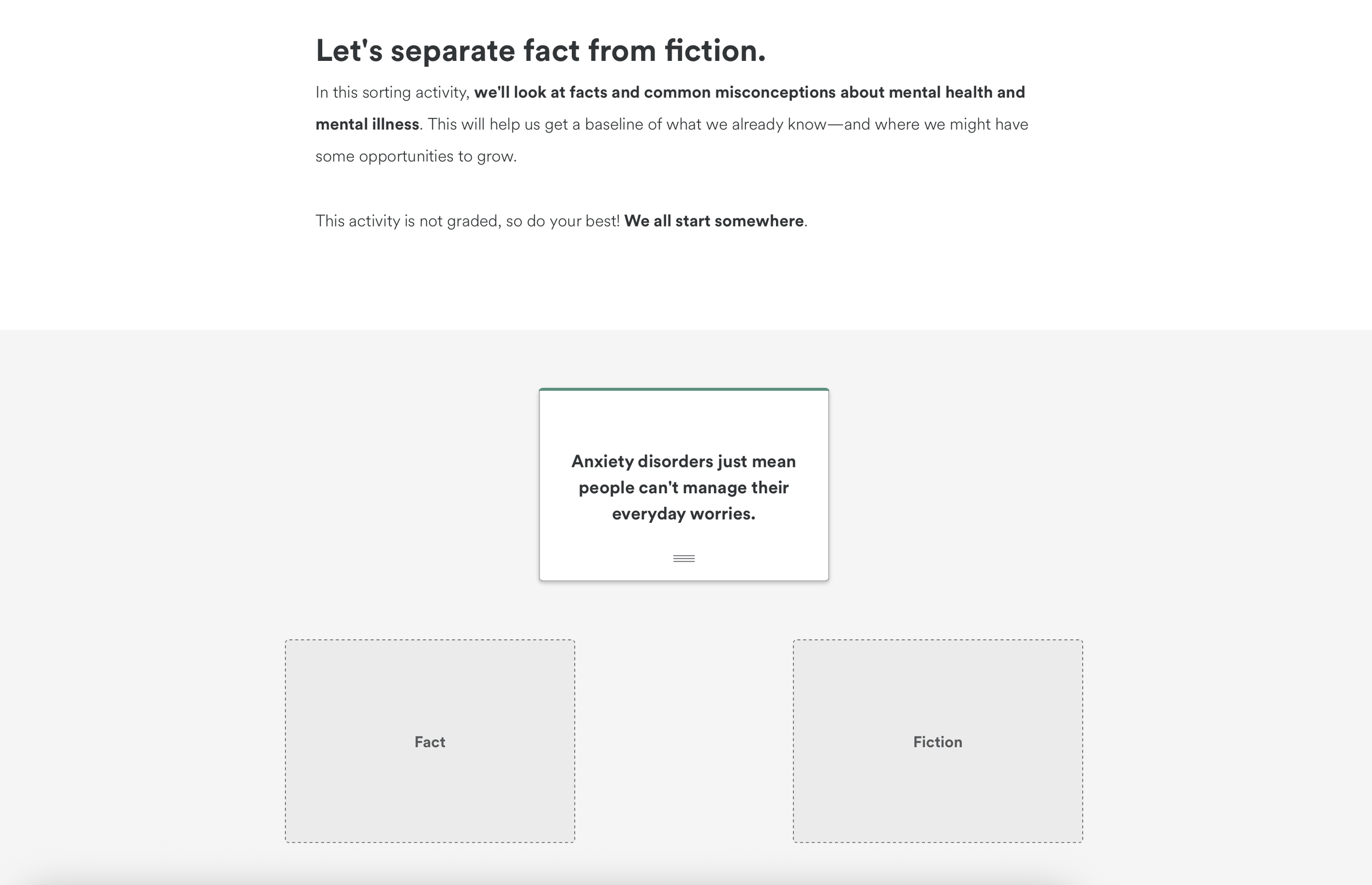
Sorting activity with common misconceptions
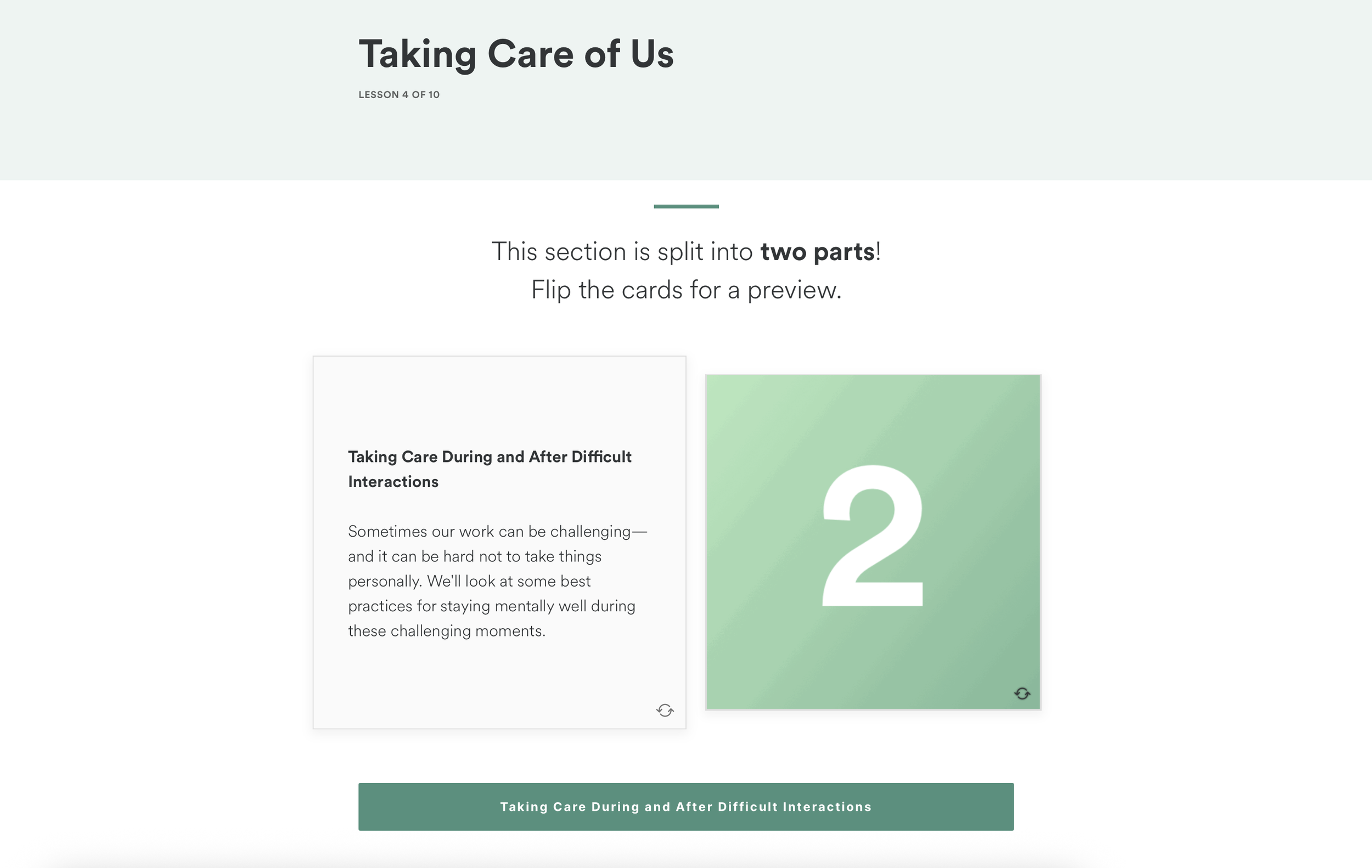
How we approach taking care of ourselves at work and in our everyday lives
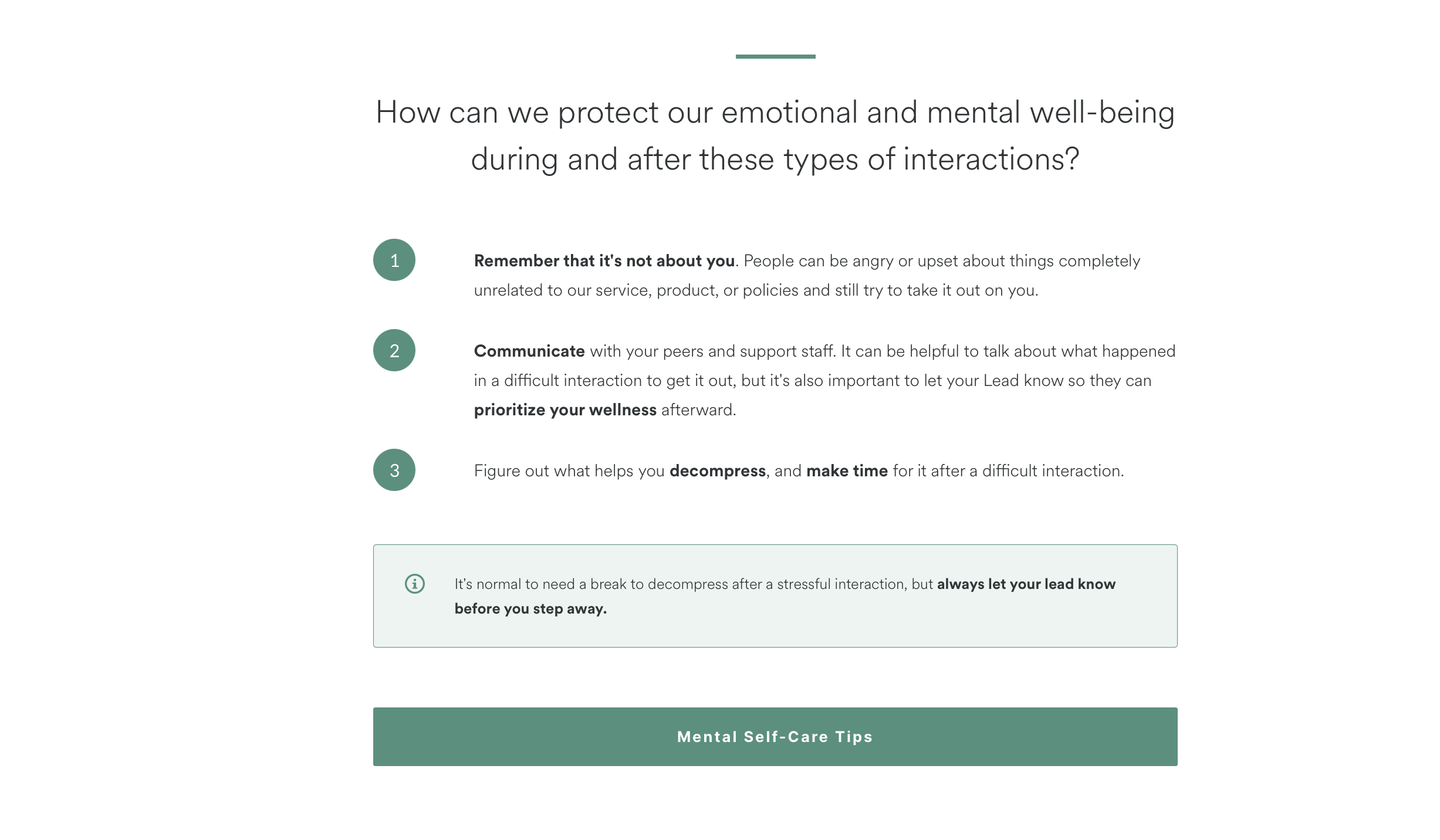
How to handle difficult interactions
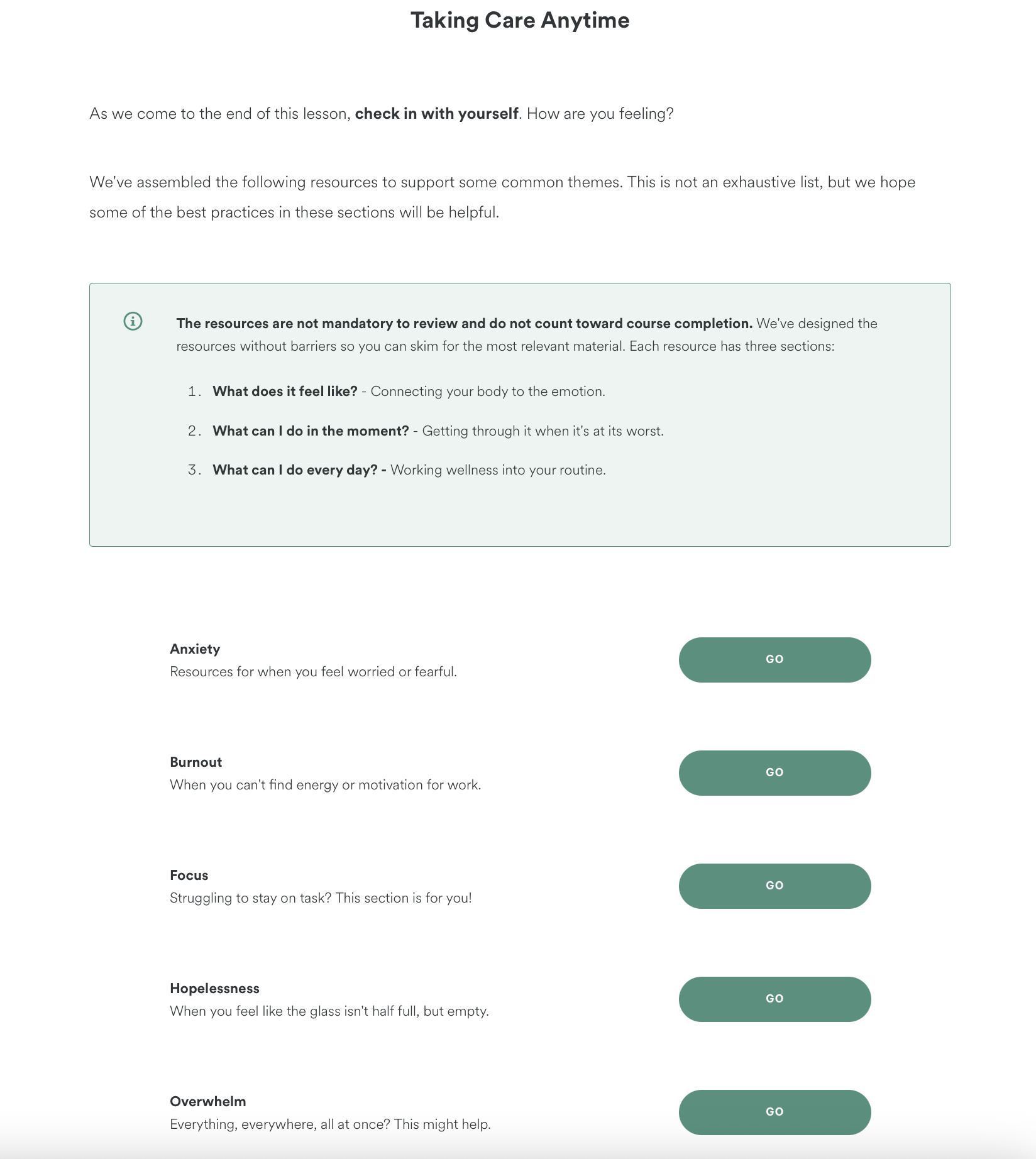
Resource section
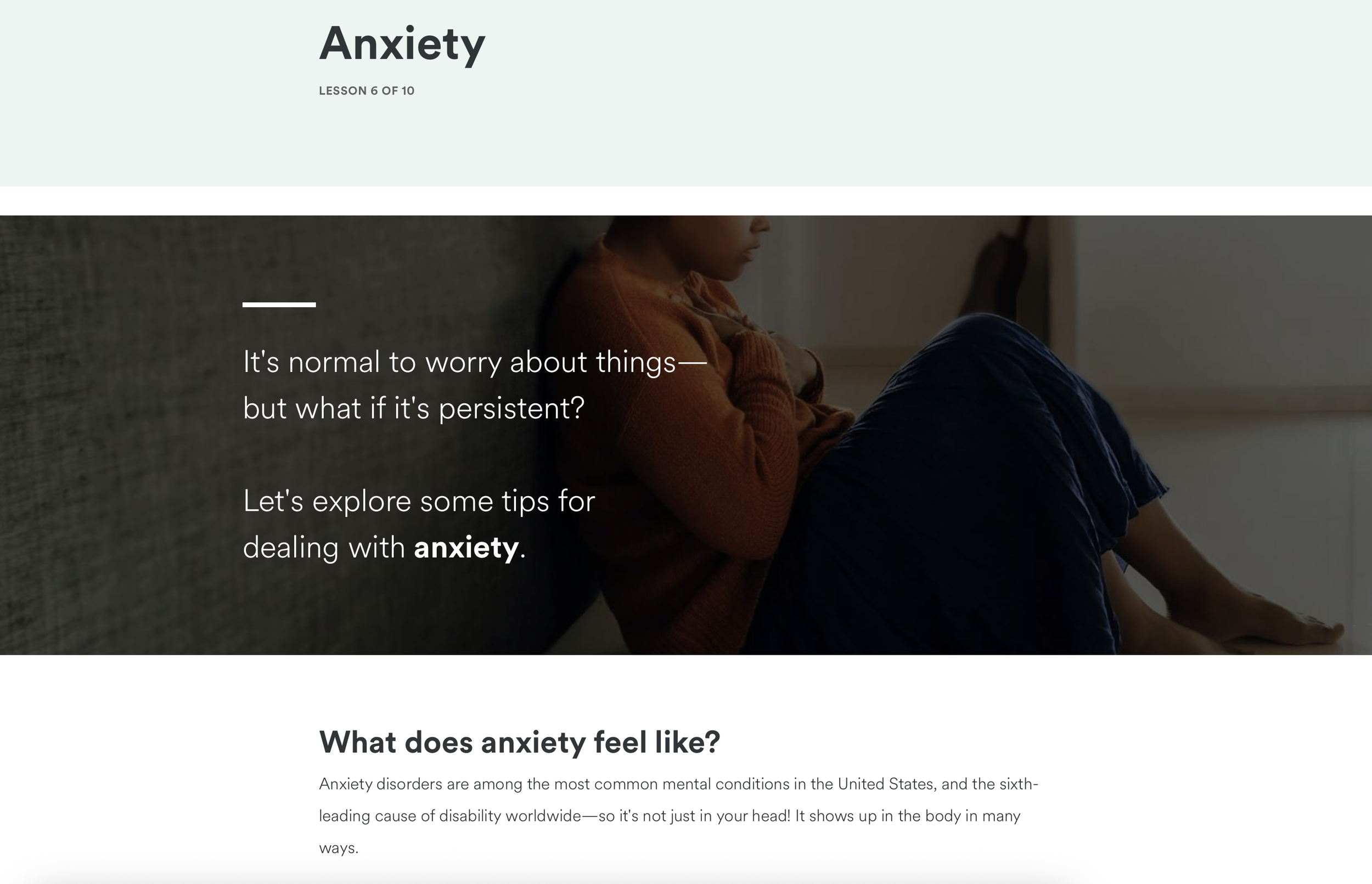
Opening for the Anxiety resource
What I’d do differently today:
The resource section was the heart of the course — but the way it was built as a single Rise course meant we had no visibility into which sections advisors were actually turning to.
If I were designing this today, I'd break each resource topic out into its own microlearning. Not just for cleaner tracking, but for something more useful: the ability to see which topics were resonating most, broken down by location.
If advisors in one region were consistently returning to the Focus module, that's a signal — and one we could act on with targeted follow-up content. A one-off course did what it needed to do in the moment, but a modular system could have turned a Covid response into an ongoing resource.